Minor Arcana guide
Six of Wands Meaning
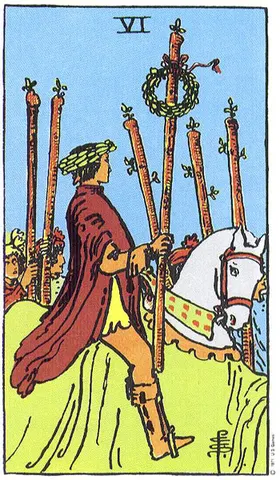
The Six of Wands presents a rider wearing a laurel, accompanied by others. It is a public image of achievement: effort has become visible and receives recognition. The card also asks what responsibility follows praise, since a moment of success can create expectations that need thoughtful care.
Read the guideBy Moonletter · Updated
A way to read it
Upright: Recognition and achievement
Upright, it signifies progress, recognition, a welcome result, or confidence renewed by support. Let acknowledgment register, then look honestly at the work behind it and the people who contributed. The card is about a favorable moment, not permanent superiority or a guarantee that every future attempt will succeed.
A way to read it
Reversed meaning
Reversed, recognition may be delayed, overlooked, or mixed with anxiety about being judged. It can also point to taking credit too quickly or depending on applause to feel secure. Review what actually went well, share credit accurately, and choose the next step for its value rather than for public approval.
Love and relationships
Use these themes alongside actual communication; a card cannot establish another person’s private feelings.
If single
For a single person, this can show confidence returning and a willingness to be seen socially. Attention may come, but popularity is not the same as compatibility. Let another person’s interest be an opening for conversation, then notice whether respect and curiosity continue after the initial excitement.
In a relationship
For a couple, the card may celebrate a shared win or one partner’s achievement. Make room for both people to be proud, especially if one person has been carrying more visibility or support work. A public milestone should strengthen the partnership rather than turn affection into a performance.
As feelings
Feelings may include admiration, pride, or relief that effort has been noticed. Someone may enjoy being associated with you or feel encouraged by your success. Still, the card cannot certify another person’s motives; distinguish observable support from the story you hope the applause means.
Reversed in love
Reversed in love, one person may feel unappreciated, overshadowed, or anxious about how the relationship appears to others. Avoid using public gestures to cover a private imbalance. Say what recognition or support would mean in practical terms, then listen to the other person’s needs as well.
Career and work
At work, this is a favorable signal for presenting a finished contribution, sharing results, or receiving feedback after a difficult push. Prepare evidence of the outcome and acknowledge collaborators. Recognition can open doors, but use it to build credibility through the next reliable action.
Reversed in career
Reversed, a promotion or praise may be delayed, or a team member may claim more credit than they earned. Document contributions and clarify expectations calmly. If you feel overlooked, request a specific review of your work rather than assuming silence means deliberate disrespect.
Future position
In a future position, the Six encourages you to prepare for making work visible and receiving feedback. Decide what counts as an honest measure of progress and how to credit collaborators. Recognition might be modest, such as useful peer feedback; the position does not promise a prize, promotion, or victory.
Reading the position
Treat this as a possible developing theme and look for real evidence that supports the interpretation, rather than a guaranteed event.
Yes or no
Editorially, this is a yes for questions about presenting work or accepting earned recognition. It leans no if the plan depends on boasting, concealing others’ contributions, or chasing approval at any cost. The card favors visible achievement with honest credit.
An editorial convention
Yes/no labels are not a universal tarot standard. This guide uses them as reflection prompts, not as factual answers or a substitute for important decisions.
Try a reflection exercise
Write down one recent accomplishment, the evidence that supports it, and everyone whose work helped. Draft a two-sentence account that names both your contribution and the shared effort. Then identify one next action that would matter even if nobody praised it.
About this exercise
This is a Moonletter editorial exercise, not an instruction from the historical source.
Imagery and symbolism
The laurel wreath signals victory and public esteem; the rider and attendants make achievement visible to a group. The elevated figure can inspire, but can also create distance between the celebrated person and the crowd. Historical interpretations link the image with victory and good news.
Six of Wands vs Five of Wands
The Five tests people through competition; the Six shows effort acknowledged in public.
Sources and interpretation
Historical imagery is referenced against A. E. Waite’s The Pictorial Key to the Tarot, Part III (public text on Wikisource). Modern relationship and work applications and exercises are editorial interpretations. Tarot symbolism is not scientific evidence about future events or another person’s thoughts.
Take the question one step further
Bring your own context
Use this as a learning prompt about the card. It is not a real draw or a prediction.
Ask the assistantA few clear answers
Questions people ask
What does the Six of Wands mean?
The Six of Wands presents a rider wearing a laurel, accompanied by others. It is a public image of achievement: effort has become visible and receives recognition. The card also asks what responsibility follows praise, since a moment of success can create expectations that need thoughtful care.
What does the Six of Wands reversed mean?
Reversed, recognition may be delayed, overlooked, or mixed with anxiety about being judged. It can also point to taking credit too quickly or depending on applause to feel secure. Review what actually went well, share credit accurately, and choose the next step for its value rather than for public approval.
What does the Six of Wands mean in love?
For a couple, the card may celebrate a shared win or one partner’s achievement. Make room for both people to be proud, especially if one person has been carrying more visibility or support work. A public milestone should strengthen the partnership rather than turn affection into a performance.
Is the Six of Wands a yes or no?
Editorially, this is a yes for questions about presenting work or accepting earned recognition. It leans no if the plan depends on boasting, concealing others’ contributions, or chasing approval at any cost. The card favors visible achievement with honest credit.